From the Queen of Naples to today: a short history of the wristwatch
The wristwatch began as a jewel for women, became a tool for soldiers and pilots and survived the quartz revolution to become today’s luxury object.

Today the wristwatch seems the most natural object in the world, yet for most of its history it was regarded as a curiosity, and a feminine one at that. Men carried their watches in a pocket, on a chain. The story of how the watch moved to the wrist runs from a queen’s commission in 1810, through the battlefields of the First World War, to a technological shock in 1969 that nearly ended traditional Swiss watchmaking.
A jewel for a queen
What is widely regarded as the first wristwatch was made by Breguet for Caroline Murat, Queen of Naples and sister of Napoleon. It was commissioned in 1810. The watch was designed to be worn on the wrist, and it belonged firmly to the world of jewellery rather than to the world of instruments.
The commission went to one of the most celebrated workshops of the day: the Paris house founded by Abraham-Louis Breguet, the watchmaker who had patented the tourbillon in 1801. Breguet’s watches were sought after by the leading figures of the age, so a commission from the emperor’s sister fitted naturally into the house’s clientele. It also shows how closely fine watchmaking and court life were linked.
That is the key to the early history. A watch on the wrist was an ornament, an extension of the bracelet. It made sense for women, whose dresses did not offer the pockets and waistcoats in which men carried their timepieces, and it was valued as much for its beauty as for telling the time.
Royal clients and Swiss pioneers
Through the 19th century the great watchmaking houses found their clients among the courts and aristocracy of Europe. Patek Philippe showed its watches at the Great Exhibition in London in 1851, and Queen Victoria owned Patek Philippe watches. Royal patronage of this kind gave a young house prestige well beyond its own country.
Patek Philippe also made an early Swiss wristwatch for the Hungarian Countess Koscowicz in 1868. Like the Breguet piece for the Queen of Naples, it was a lady’s jewel, and it confirms the pattern of the time: the wristwatch was something a woman wore.
For most of the 19th century, men carried pocket watches. A gentleman’s watch lived in his waistcoat, attached to a chain, and was drawn out with a certain ceremony. A man wearing a watch on his wrist would have looked unusual, because wristwatches were seen as ladies’ jewellery.
For most of its history the wristwatch was regarded as a curiosity, and a feminine one at that.
Soldiers, pilots and practical men
What changed attitudes was practicality. A is awkward when both hands are busy, and soldiers were among the first to notice. Military use in the late 19th century, and above all during the First World War, made wristwatches practical for men. Officers coordinating movements needed to read the time at a glance, without fumbling in a pocket.
Aviation pointed in the same direction. In 1904 Cartier designed the Santos for the Brazilian aviator Alberto Santos-Dumont. The usual account is that he wanted to read the time in flight without letting go of the controls, something a pocket watch could not offer. The Santos is often cited as one of the first wristwatches designed for a man.
Many early men’s wristwatches were improvised. Small pocket watch movements were fitted into cases with wire lugs, so that a leather strap could pass through, and these so-called trench watches look quite makeshift today. They show an object being reinvented for a new purpose almost overnight.
By the time soldiers returned from the First World War, the wristwatch had acquired a new reputation. It was no longer simply a lady’s jewel but a sensible, modern object for anyone with an active life. Over the following decades the pocket watch gradually gave way, and the wristwatch became the normal way to carry the time.
The quartz revolution
For the first half of the 20th century, a wristwatch meant a , powered by a spring and regulated by a balance wheel. That changed in 1969, when Seiko introduced the Astron, the first on the market. A quartz watch keeps time with a tiny vibrating crystal driven by a battery, and it is far more accurate than a mechanical movement.
As quartz watches became cheaper and more widespread, the traditional Swiss watch industry fell into crisis in the 1970s and 1980s. Mechanical watches suddenly seemed old-fashioned, expensive and less precise. Many workshops closed, and skills that had been passed down for generations were at risk.
From instrument to luxury object
The recovery came from an unexpected direction. Once a quartz watch could tell the time better than any mechanical piece, the mechanical watch no longer had to compete on accuracy. It could instead be valued for its craftsmanship, its history and the pleasure of owning something made by hand.
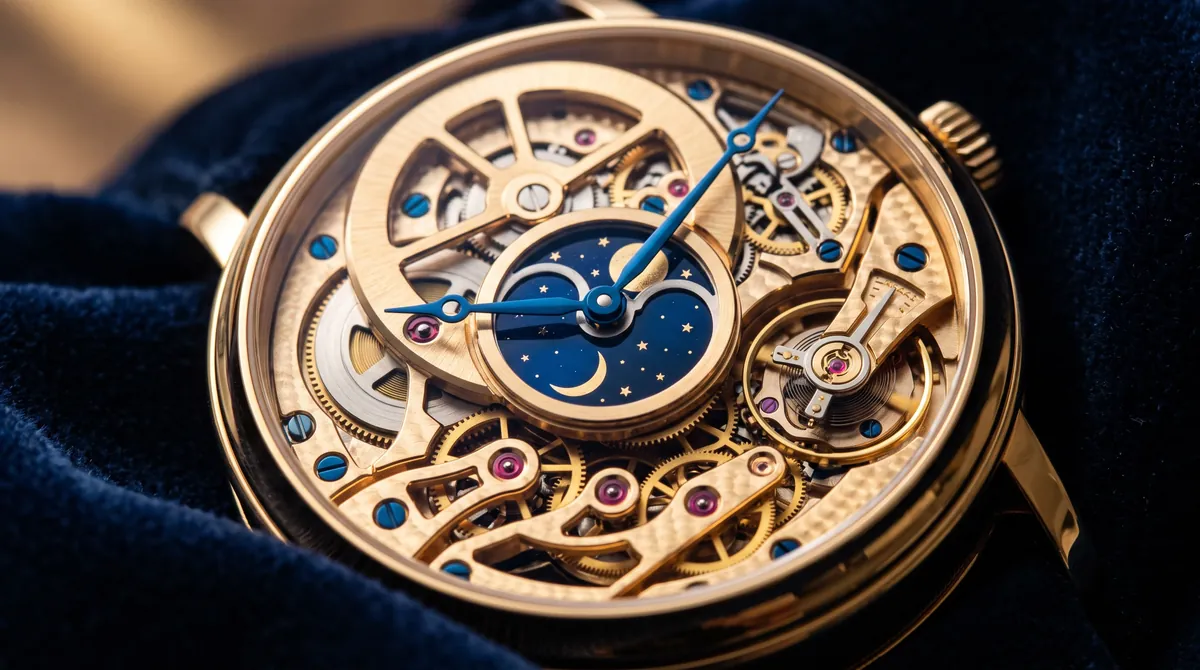
The later revival of mechanical watches turned them into luxury objects, which is how most collectors see them today. In a sense, the wristwatch has come full circle. It began as a jewel for a queen, became a tool for soldiers and pilots, and has returned to being something people wear above all for its beauty and meaning. Few people need a mechanical watch to know the time, which is exactly why choosing one has become a personal statement.
Glossary
- Pocket watch
- A watch carried in a pocket, usually on a chain, the standard men’s timepiece for most of the 19th century.
- Quartz watch
- A battery-powered watch regulated by a vibrating quartz crystal, introduced to the market in 1969.
- Mechanical watch
- A watch powered by a wound spring and regulated by a balance wheel, without a battery.
- Quartz crisis
- The upheaval in traditional Swiss watchmaking in the 1970s and 1980s caused by cheap quartz watches.
Questions readers ask
Who made the first wristwatch?
The watch widely regarded as the first wristwatch was made by Breguet for Caroline Murat, Queen of Naples and sister of Napoleon, and was commissioned in 1810. Patek Philippe made an early Swiss wristwatch for the Hungarian Countess Koscowicz in 1868. Both were ladies’ pieces, worn as jewellery, at a time when men still carried pocket watches.
When did men start wearing wristwatches?
Military use in the late 19th century, and especially during the First World War, made wristwatches practical for men, who could read the time without reaching into a pocket. Aviation helped too: Cartier designed the Santos for Alberto Santos-Dumont in 1904. After the war, the wristwatch steadily replaced the pocket watch as the normal choice for men.
What was the quartz crisis?
In 1969 Seiko introduced the Astron, the first quartz watch on the market. Quartz watches were more accurate than mechanical ones and became cheaper over time, which led to a crisis in traditional Swiss watchmaking in the 1970s and 1980s. Mechanical watches later recovered by being valued as luxury objects rather than as precision instruments.