The 4Cs of diamonds, made visual
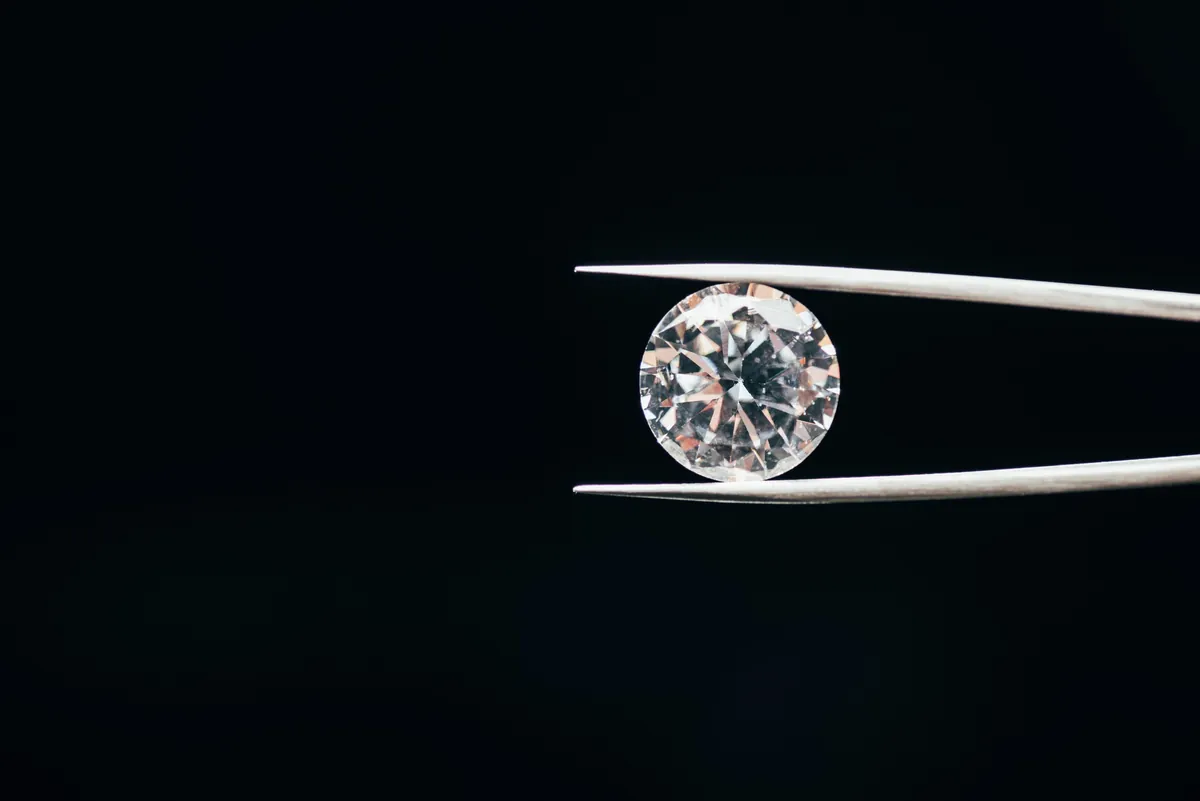
Cut, colour, clarity and carat, explained in plain language so that you can read a diamond grading report with confidence and know what each grade really means.
Try “pearls”, “Cullinan” or “hallmark”. Press Esc to close.
Tool
Move the sliders and watch carat, colour, clarity and cut change a round brilliant, drawn at true size on your screen.
The size of a round brilliant grows with the cube root of its weight. A one carat stone measures roughly 6.4 to 6.5 mm across, but a two carat stone is only about 8 mm, not twice as wide. The studio calculates the approximate diameter for a well proportioned round brilliant and, once your screen is calibrated, draws it at true size.
Colour runs from D, completely colourless, to Z, with a light yellow or brown tint. The preview adds the tint gradually so you can see why the jump from D to G is subtle while the step from J to M is easy to notice. Clarity describes inclusions seen at ten times magnification; the dots in the preview grow in number and size as the grade falls. Cut is the only C made by people, and it decides how much light comes back to your eye, so the sparkle in the preview fades with weaker cut grades.
We deliberately show no prices. Diamond prices depend on all four Cs together, on the laboratory report, on fluorescence and on the market of the day. Use the studio to understand a grading report, and ask for the report itself before you buy.
It is as exact as the calibration of your screen and the proportions of the stone allow. Real diamonds of the same weight can differ by a few tenths of a millimetre depending on how deep or shallow they are cut, which is one reason the cut grade matters.
Grades D to F are called colourless and G to J near colourless. Most people cannot see a tint in a mounted G or H stone, especially in a white metal setting, while from K onwards a warm tone becomes noticeable to many eyes.
Read more
Cut, colour, clarity and carat, explained in plain language so that you can read a diamond grading report with confidence and know what each grade really means.
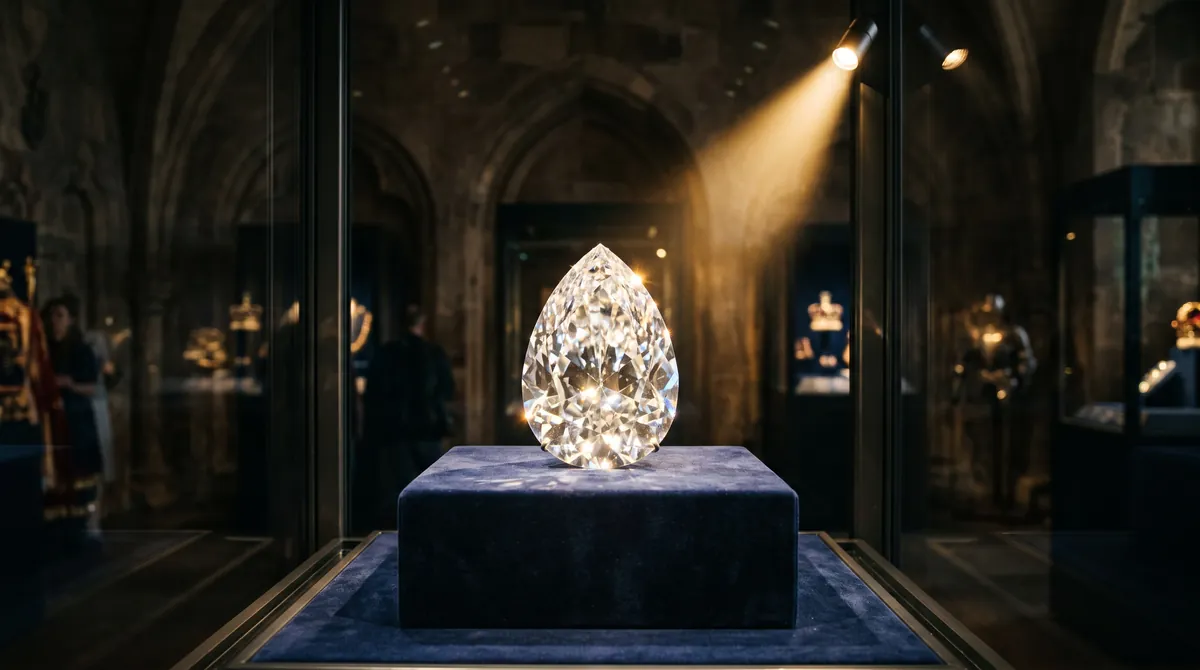
Found in South Africa in 1905, given to Edward VII in 1907 and cut in Amsterdam in 1908: how the largest gem diamond ever found became part of the Crown Jewels.
The three great coloured gemstones share a long royal history. What they are made of, where the finest come from, what affects their value and which famous jewels made them stars.