Coronations: the objects behind the ceremony
St Edward’s Crown, the Orb, two sceptres and a medieval spoon: what each piece of the British coronation regalia means and how they were used in 2023.
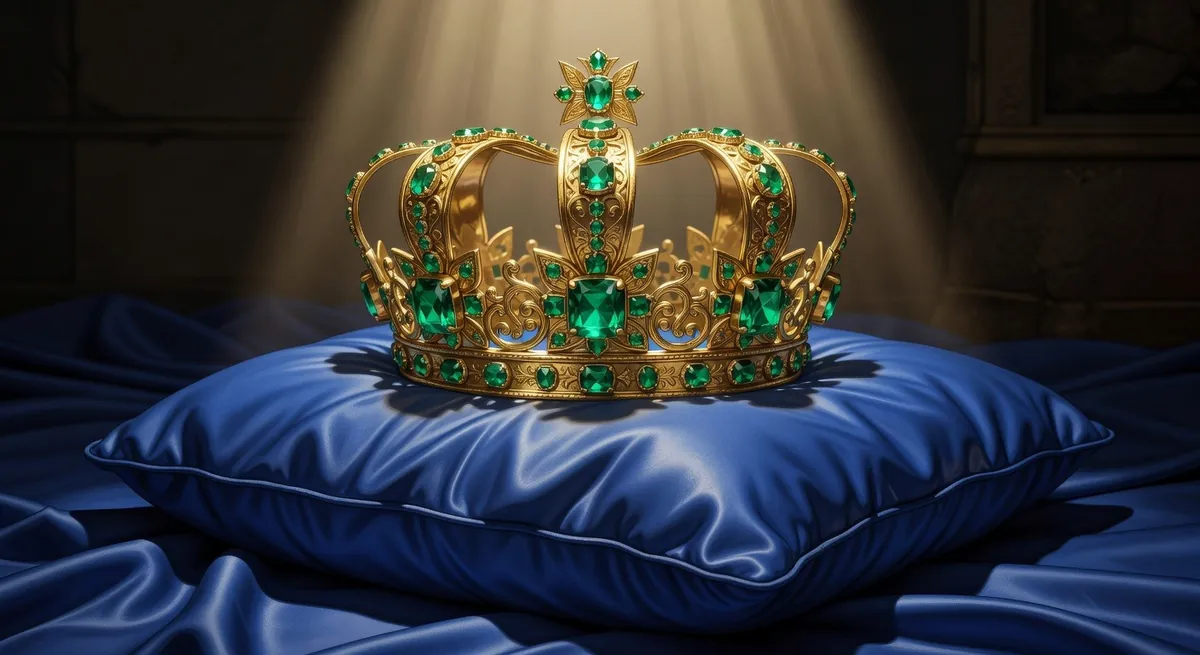

A coronation is a religious service, a state occasion and a piece of living history, and at its centre stands a small group of extraordinary objects. Each crown, sceptre and vessel has a precise role. Knowing what they mean turns a spectacle of gold and jewels into a ceremony you can actually read.
Why most of the regalia dates from 1661
You might expect the British to be medieval. Most of it is not. Most of the regalia was made for the coronation of Charles II in 1661, because earlier regalia had been sold or melted down after the abolition of the monarchy in 1649. For eleven years, from 1649 to 1660, England had no king, and objects so closely tied to monarchy had no place in the new order.
When the monarchy was restored in 1660, new pieces were needed for the coronation that followed. Goldsmiths created a fresh set of crowns, sceptres and an orb for the king, and these pieces, altered and reset over the centuries, have served British coronations ever since.
The loss of the older regalia explains a curious feature of the collection. Many of the objects carry ancient names and ancient meanings, yet they were physically made in the seventeenth century. The ideas are medieval; much of the metalwork is Restoration.
Knowing what they mean turns a spectacle of gold and jewels into a ceremony you can actually read.
The oldest survivor: the Coronation Spoon
One object escaped the destruction. The Coronation Spoon is the oldest item in the regalia: it dates from the 12th century and survived the . Its survival makes it a rare physical link between medieval coronations and those of today.
The spoon plays its part at the heart of the service. Holy oil is poured from the , a golden vessel in the shape of an eagle, into the spoon, and the sovereign is anointed. The is the most sacred part of the ceremony and is traditionally screened from view.
That privacy is deliberate. The coronation is, at its heart, a religious rite, and the anointing marks the moment at which the sovereign is consecrated for the role. Everything else, however splendid, follows from it.
Two crowns with two different jobs
St Edward’s Crown, made in 1661 of solid gold, weighs about 2.23 kg. It is reserved for the moment of crowning itself, which is why it is worn so rarely, often only once in a reign.
The lighter Imperial State Crown is worn when the sovereign leaves Westminster Abbey after the service, and at the State Opening of Parliament. It carries some of the most famous stones in the collection, including Cullinan II at the front and the Black Prince’s Ruby, which is in fact a spinel.
The difference between the two crowns is practical as well as symbolic. One is the crown of the sacred moment, heavy and used only briefly; the other is the crown the sovereign can actually wear for longer, on the procession out and on formal state occasions. Both are on display in the Jewel House, so you can compare their size and character side by side.
Westminster Abbey itself has been the setting for English and then British coronations since 1066, so even the building forms part of the regalia’s story.
Orb and sceptres: power made visible
Before the crowning, the sovereign receives the objects that express the nature of the office. Each one carries a meaning that would have been obvious to a seventeenth century congregation.
- The Sovereign’s Orb: a golden sphere topped by a cross, representing the Christian world.
- The Sovereign’s Sceptre with Cross: representing temporal power, and holding Cullinan I, the Great Star of Africa.
- The Sovereign’s Sceptre with Dove: representing spiritual power.
Held together, the two sceptres express the dual nature of the office in the coronation tradition: authority in the world and a spiritual role. The orb, crowned by its cross, stands for the Christian world in which the sovereign was understood to reign. Seen together, the orb and the two sceptres turn abstract ideas about power and faith into objects that everyone present could see and understand.
The Sceptre with Cross is also a jewel of the first rank. Cullinan I, about 530.2 carats and set at its head, is the largest of the stones cut from the Cullinan diamond, so the symbol of temporal power carries one of the most famous diamonds in the world.
The regalia in 2023
On 6 May 2023 King Charles III was crowned with St Edward’s Crown in Westminster Abbey. Queen Camilla was crowned with Queen Mary’s Crown, an existing crown rather than a newly made one.
The previous coronation had taken place in Westminster Abbey on 2 June 1953, seventy years earlier, so for most people watching it was the first they had ever seen. Many of the objects that appear in photographs from 1953 were used again in 2023, which is exactly what regalia held for successive reigns is meant for.
The service followed the traditional sequence of recognition, oath, anointing, investiture and crowning. As tradition requires, the anointing was screened from view. Afterwards the King left the Abbey wearing the lighter Imperial State Crown.
The regalia are working objects as well as treasures. They leave the Tower when ceremony requires them and return afterwards, and the Imperial State Crown in particular appears at the State Opening of Parliament as well as at coronations.
For most of the time, the regalia are kept in the Jewel House at the Tower of London. When they leave it for a coronation, they carry more than three and a half centuries of ceremony with them and, in the case of the Spoon, far more.
Glossary
- Regalia
- The ceremonial objects used at a coronation, such as the crowns, sceptres, orb and spoon.
- Ampulla
- The golden, eagle-shaped vessel holding the holy oil used to anoint the sovereign.
- Anointing
- The most sacred part of the coronation, when the sovereign is anointed with holy oil, traditionally screened from view.
- Commonwealth
- The period after the abolition of the monarchy in 1649, before the Restoration of 1660.
Questions readers ask
Why is so little of the regalia medieval?
After the abolition of the monarchy in 1649, the earlier regalia was sold or melted down. When the monarchy returned, a new set was made for the coronation of Charles II in 1661, and most of today’s regalia dates from then. The Coronation Spoon, from the 12th century, is the outstanding exception, as it survived the Commonwealth.
What is the difference between St Edward’s Crown and the Imperial State Crown?
St Edward’s Crown, made in 1661 of solid gold and weighing about 2.23 kg, is used for the moment of crowning. The lighter Imperial State Crown is worn as the sovereign leaves Westminster Abbey and at the State Opening of Parliament. At the 2023 coronation King Charles III was crowned with the first and left the Abbey wearing the second.