Family heirlooms: how royal tiaras pass between generations
Three British tiaras, three journeys through the family: how royal jewels are inherited, lent and worn again, and why some never belonged to the Crown.
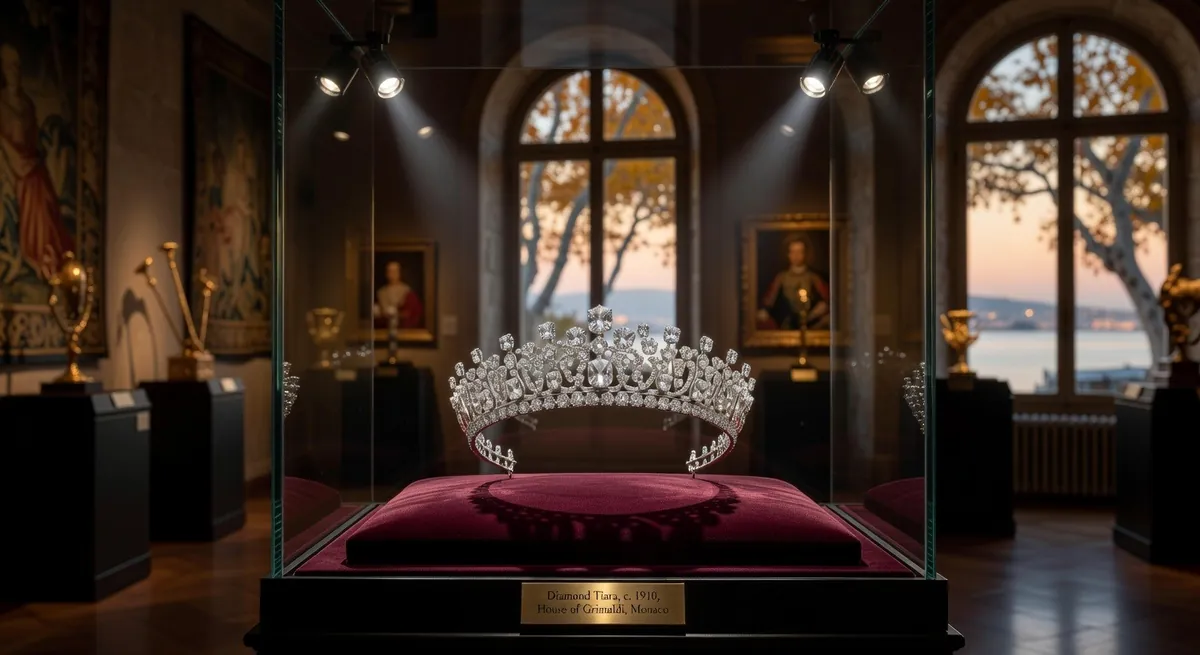

A royal tiara rarely belongs to one woman for long. It moves through a family, appears at a wedding, spends years out of sight and then returns on a new head. Following three British tiaras through the generations shows how royal jewels are inherited, and worn, and why the rules are less simple than a single portrait suggests.
Lent, not given: how royal jewels move
The first thing to understand is that royal tiaras are often lent by the sovereign rather than given outright. Many are considered heirlooms, either of the Crown or of the family, and are expected to stay within it. A bride or a princess may wear a tiara on an important occasion without ever owning it.
This explains why the same piece can appear on very different women across a century. The tiara stays; the wearer changes. Each appearance adds another chapter to its history, and each chapter is recorded in photographs that later generations study closely.
Lending also gives a jewel a kind of second life. A piece made for one queen’s taste can be worn decades later in a very different setting, and the contrast between the original owner and the new wearer becomes part of its story.
The line between Crown jewels and family jewels is not always visible from the outside. Two tiaras can look equally grand at a state banquet, yet one may be held for the Crown while the other is a family piece inherited privately. On the night the difference hardly shows; over the decades it shapes how each jewel moves.
The tiara stays; the wearer changes.
The Cartier Halo Tiara
The Cartier Halo Tiara was made in 1936. It was bought by the Duke of York, later King George VI, for his wife, Elizabeth. Before the year was out, the Duke had come to the throne and his wife had become Queen.
In 1944 the tiara was given to Princess Elizabeth on her 18th birthday, passing to the next generation. Decades later, in 2011, Catherine Middleton wore it on her wedding day, lent by Queen Elizabeth II. A jewel bought by a duke for his wife had reached a royal bride three generations later.
The Halo Tiara shows each stage of the system in a single object: a purchase by a husband, a gift to a daughter on a milestone birthday and, finally, a loan for a wedding. Few jewels tell the story of royal inheritance quite so neatly.
The Lover’s Knot Tiara
The Lover’s Knot Tiara, also called the Cambridge Lover’s Knot, was made by in 1913 to 1914 for Queen Mary. Its design was based on a tiara owned by her grandmother, so even when new it looked back to an earlier generation.
Queen Elizabeth II later lent it to Diana, Princess of Wales, and it has since been worn by Catherine. Few pieces show the lending system more clearly: commissioned by one queen, held by another and worn by two princesses of later generations.
The tiara is also a reminder that royal jewellery often copies itself. A design admired in one generation is remade for the next, and the new piece then gathers a history of its own.
The Queen Mary Fringe Tiara
The Queen Mary takes its form from the fringe style, with rows of graduated vertical spikes rising from a band. Princess Elizabeth wore it on her wedding day in 1947. The fringe is one of the most recognisable tiara styles, and its clean, upright lines suit both a formal portrait and a wedding veil.
Seventy-three years later Princess Beatrice, a granddaughter of Queen Elizabeth II, wore the same tiara at her own wedding in 2020. The same jewel framed two royal weddings more than seven decades apart, a reminder of how directly these pieces connect one generation with the next.
For admirers of royal jewellery, such repeat appearances are part of the pleasure. Placing two wedding photographs side by side, one from 1947 and one from 2020, shows the same diamonds in a very different world, worn by a grandmother and her granddaughter.
The Spencer Tiara: a family’s own heirloom
Not every tiara at a royal wedding comes from the royal collection. When Lady Diana Spencer married in 1981, she wore the Spencer Tiara, which belongs to her own family, the Spencers, not to the royal collection.
The distinction matters. A tiara owned by the Crown or by the royal family is lent within that family, while a private family follows the rules of its own house. The Spencer Tiara reminds us that aristocratic families keep their own jewels and their own traditions alongside those of the monarchy.
Why the rules matter
Inheritance, lending and family ownership all shape the life of a royal jewel. Knowing which applies explains why one tiara reappears again and again, while another is seen only at a single wedding.
It also changes how you read a photograph. A tiara on a royal bride is rarely just an accessory chosen for the day. It is a statement about family, continuity and the generations who wore it before, and each new appearance adds to a history that is still being written.
Next time a familiar tiara appears, ask whose it is, who wore it first and how it reached its current wearer. The answers usually lead straight back through the family tree, one wedding at a time.
Glossary
- Fringe tiara
- A tiara made of rows of graduated vertical spikes, like the Queen Mary Fringe Tiara.
- Heirloom
- A valuable object passed down within a family, or kept by the Crown, across generations.
- Garrard
- A London jeweller founded in 1735, which made the Lover’s Knot Tiara for Queen Mary in 1913 to 1914.
- Lent
- In royal jewellery, worn with the owner’s permission while ownership stays with the sovereign or the family.
Questions readers ask
Do royal brides own the tiaras they wear?
Usually not. Royal tiaras are often lent by the sovereign rather than given outright, and many are considered heirlooms of the Crown or the family. Catherine Middleton, for example, wore the Cartier Halo Tiara lent by Queen Elizabeth II. Some brides wear jewels from their own families instead, as Lady Diana Spencer did with the Spencer Tiara in 1981.
Why do the same tiaras appear again and again?
Because they stay within the family while the wearers change. A tiara made for one queen can pass to her successors and be lent to princesses of later generations. The Queen Mary Fringe Tiara, worn by Princess Elizabeth in 1947 and by Princess Beatrice in 2020, shows how a single jewel can link weddings more than seventy years apart.