Purdey silks: country life from the archive, printed in Macclesfield
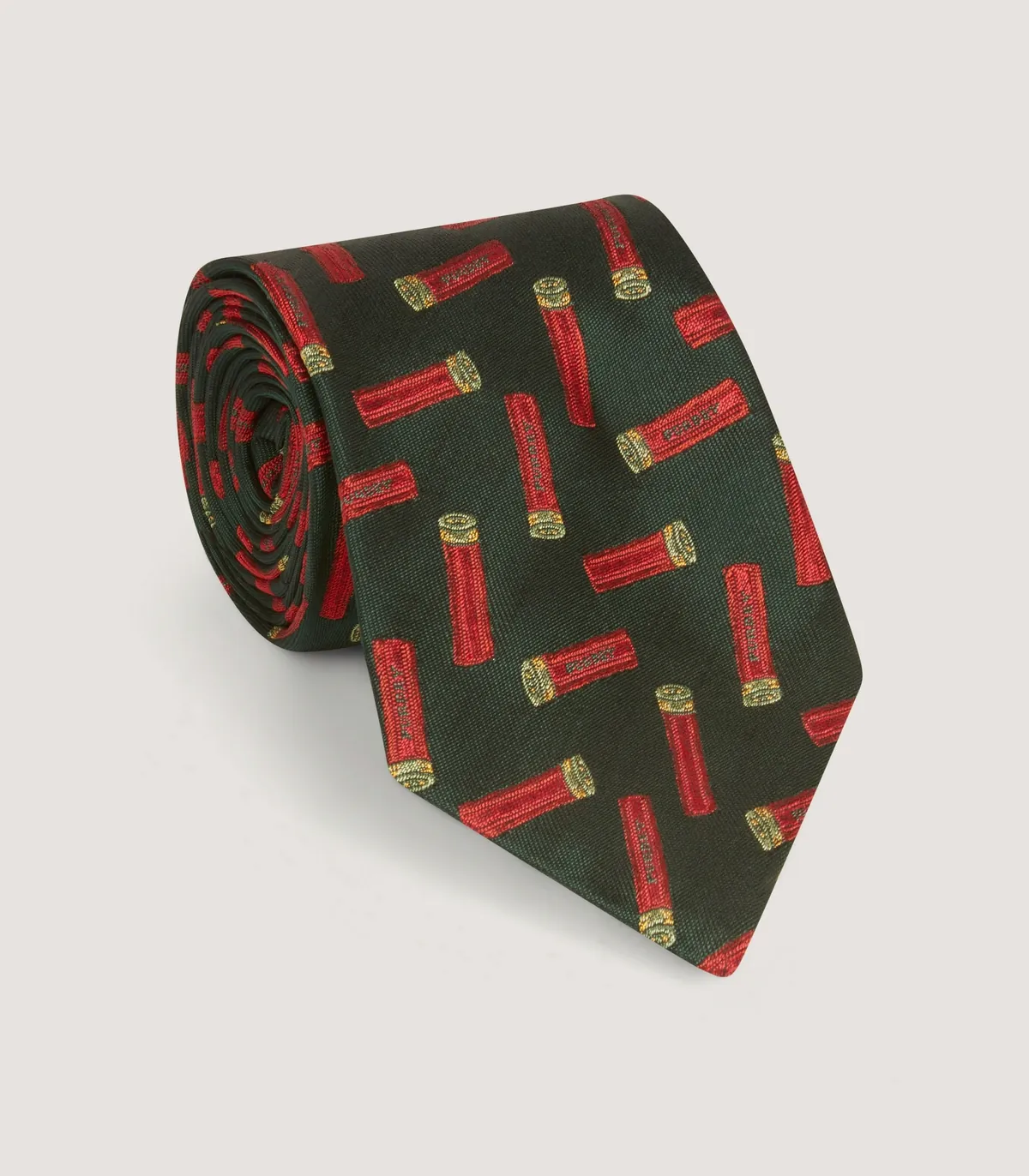
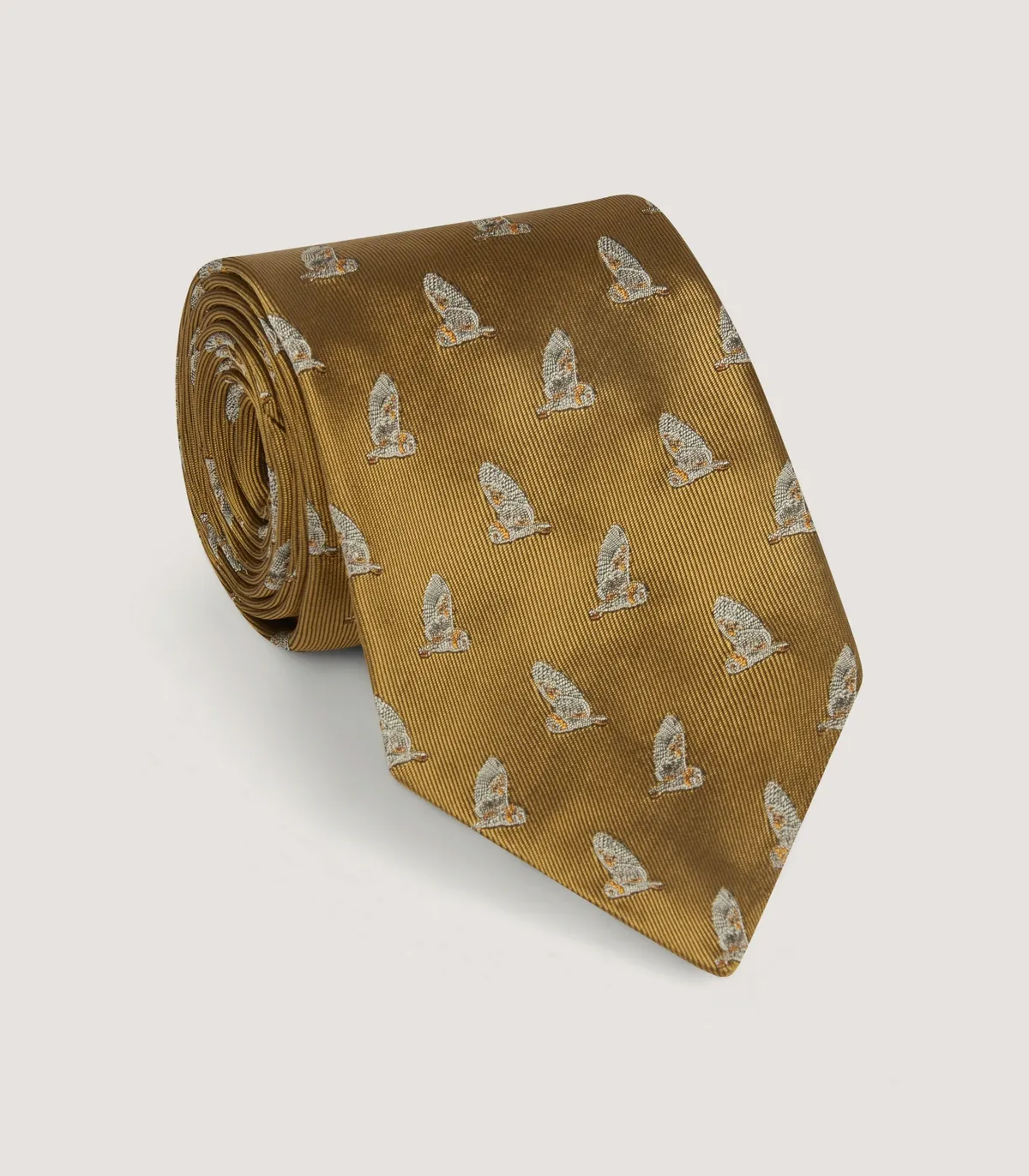
Barn owls, boxing hares and gun cartridges: Purdey’s latest silks turn the house archive into small scenes of country life, printed in Macclesfield and finished by hand.
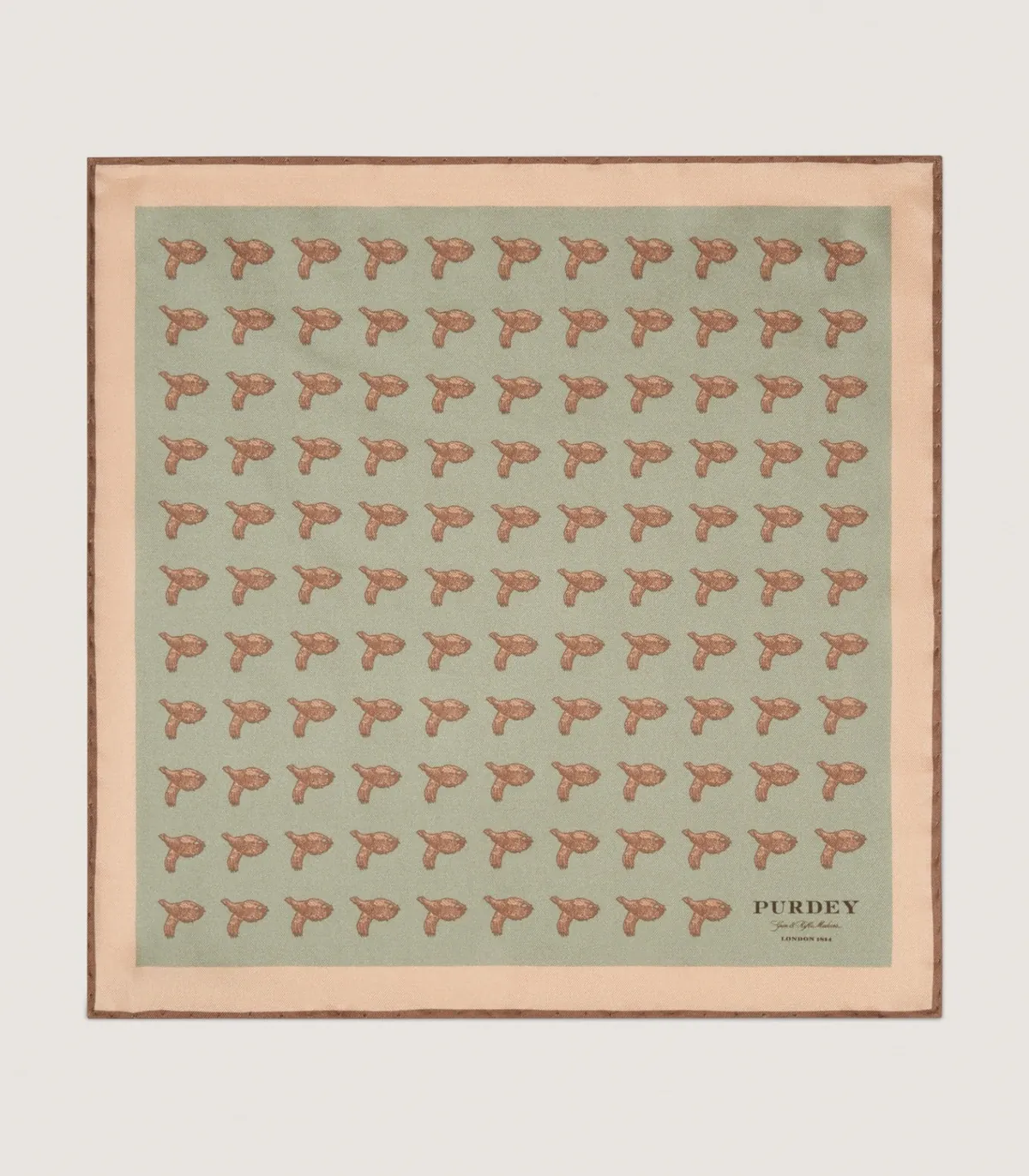
Flying Grouse Pocket Square in silk, 30 × 30 cm. Photo: Purdey
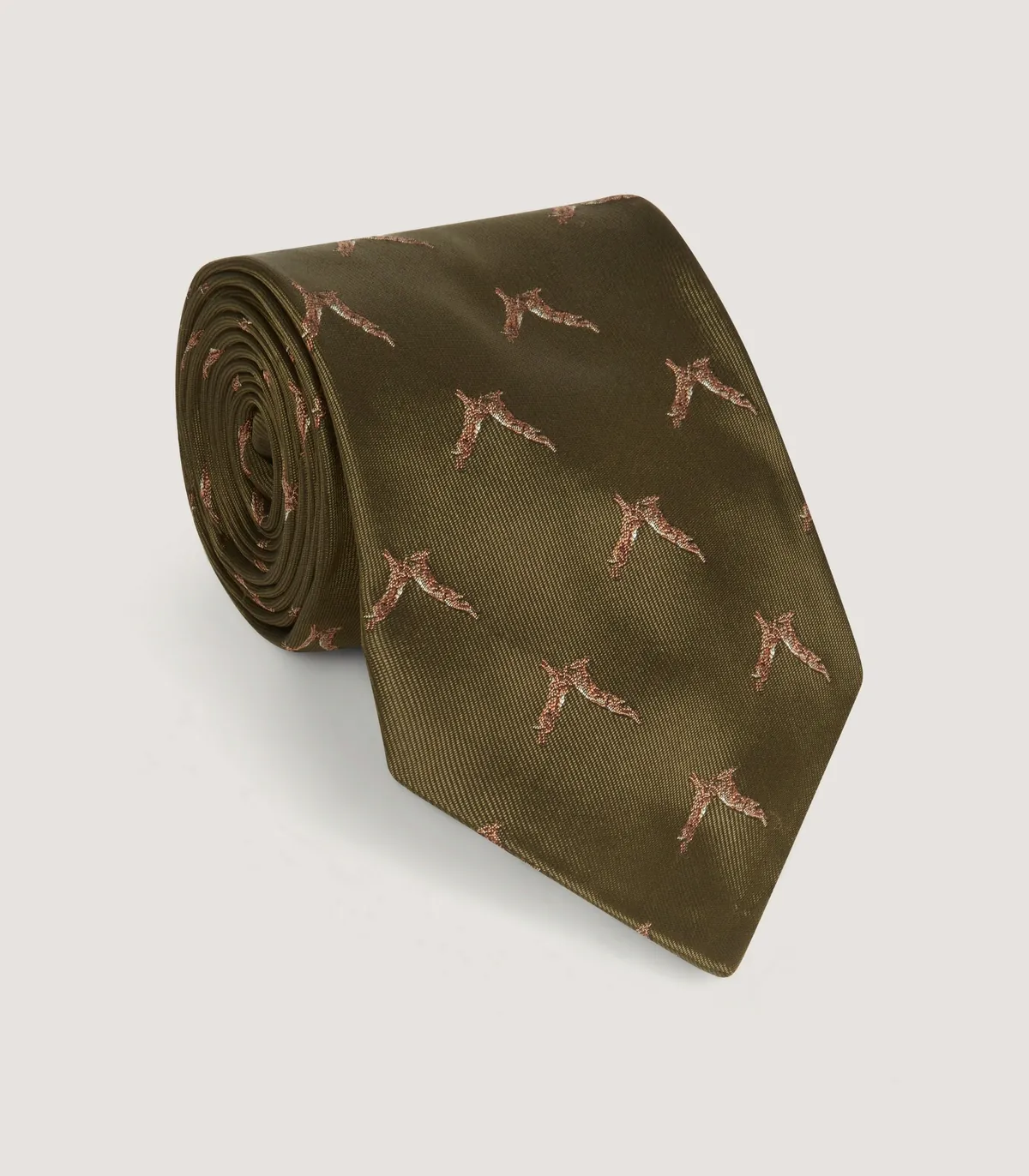
Look closely at a silk from Purdey and the pattern begins to tell stories. Rattling gun cartridges, barn owls at rest and boxing hares squaring up in the field appear as small vignettes of English country life. Many of the motifs come from the house archive, others are newer artworks, and together they show how closely Purdey is still tied to the traditions and rhythms of the land.
An archive full of paper
When Giles Deacon, Creative Director at Purdey, began to explore the company’s history, he found what he calls “an extraordinary collection of original gun labels, cartridge boxes, adverts from the 1800s through to the 1970s, menus, invitations”. For Deacon the material was a kind of visual archaeology rather than a mere pattern book.
I wanted to explore that world, and use it to tell stories about Purdey’s historical legacy.
The house’s story begins in 1814, and from the start it has belonged to the countryside and to the craft of sport. The latest silks celebrate it through pattern: grouse rise over heather and stags appear in miniature. The prints play stillness against movement and nature against design; together they form a small portrait of sporting life in Britain.
Printed in Macclesfield
The silks are printed in Macclesfield, the Cheshire town whose looms have produced fine silk for centuries. Purdey works there with master printers who keep those traditions alive. Modern digital printing captures even the finest lines of an archive drawing, yet the work still depends on people.
The collection also includes a series of woven silks, crafted on traditional looms, which allow delicate detail and subtle depths of colour.
Finished by hand
From the printer the silks travel to the workshop, where they are selected by weight: 36- silk for ties, 18-ounce for scarves and pocket squares. Everything is finished by hand. The edges are rolled and stitched individually, and a single square takes nearly 40 minutes to complete.
Purdey’s tie maker is one of only a handful left in the UK and says that feel decides each step, from the angle of a cut and the pressure of the press to the behaviour of every colour. “Even the same design can handle differently from one to another,” the tie maker explains. “You just learn to feel it. Some silks stretch, some shrink. You adapt.”
Makers with decades of experience share the workroom with a younger generation, many of whom inherited their love of the craft from their families. The pace is slow and the work exacting, about as far from automation as it gets.
A thread back to the Silk Road
Silk is a well-travelled material. It left ancient China along the routes later called the Silk Road and eventually reached British mills, where its lustre found a new home. Purdey’s silks continue that journey in their own way. A motif from an old cartridge box or gun label is printed, rolled and stitched, and finally knotted beneath a collar.
Glossary
- Jacquard
- A fabric whose pattern is woven into the cloth on the loom rather than printed onto its surface.
- Colourway
- One colour version of a design; the same motif can be made in several colourways.
- Ounce
- In tie making, a traditional measure of silk weight: the higher the number, the heavier and denser the cloth.
Questions readers ask
Where are Purdey’s silks made?
The silks are printed in Macclesfield, the Cheshire town whose looms have produced fine silk for centuries, where Purdey works with master printers. The collection also includes woven jacquard silks made on traditional looms. Afterwards every piece is finished by hand in the workshop.
How are the silk squares finished?
After printing, the silks are sorted by weight: 36-ounce silk for ties and 18-ounce silk for scarves and pocket squares. The edges of each square are then rolled and stitched individually by hand, a step that takes nearly 40 minutes for a single square.
Where do the motifs come from?
Many come from the Purdey archive, which Creative Director Giles Deacon found full of original gun labels, cartridge boxes, adverts from the 1800s to the 1970s, menus and invitations. Others are newer artworks. They show scenes of country life such as barn owls, boxing hares, grouse and stags.