Hallmarks: how to read the tiny stamps on precious metal
The tiny stamps on silver and gold record who stood behind a piece, how pure it is, where it was tested and often when. Here is how to read them.
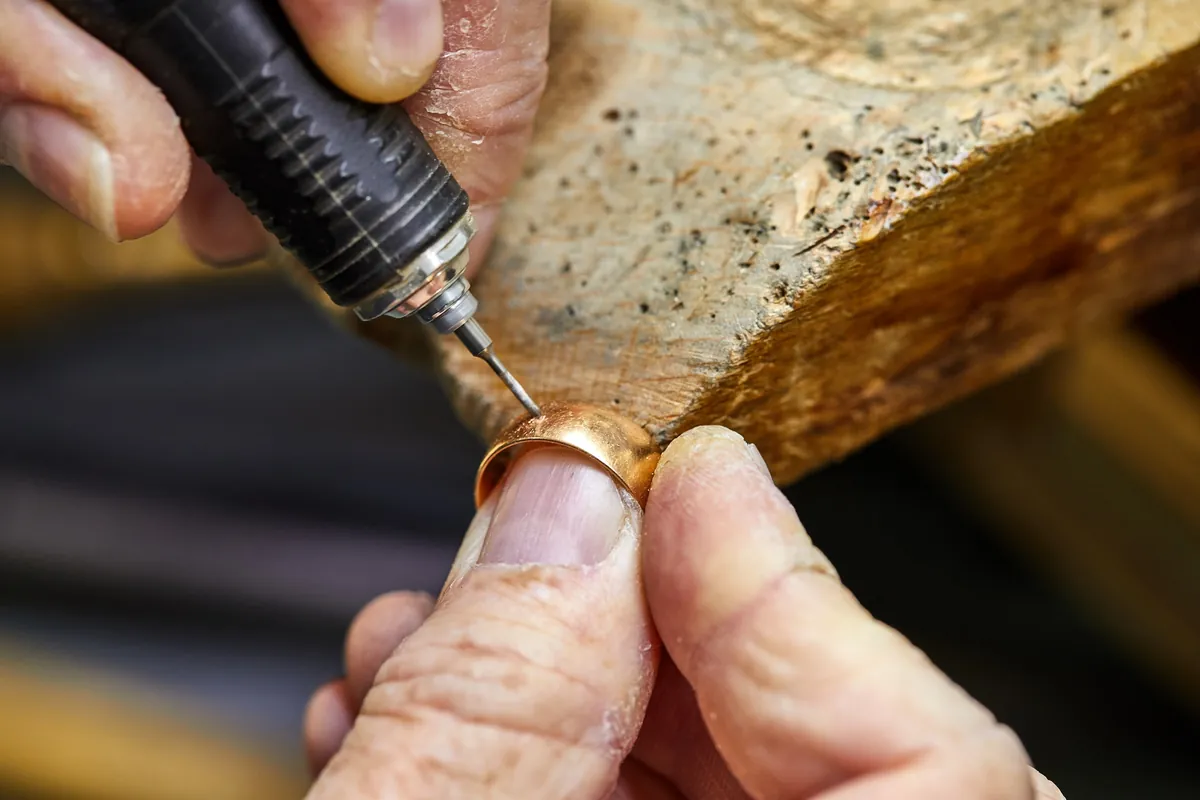
Turn over a silver spoon or look inside a gold ring and you may find a row of tiny stamps. To the untrained eye they look like decoration. In fact they are a compact record of who sponsored the piece, how pure the metal is, where it was tested and, often, in which year. British hallmarks are the classic example, and once you can read them, the marks of other countries become easier to follow too.
A system seven centuries old
Hallmarking in England goes back to 1300, when a statute of Edward I required silver to be tested, or assayed, and marked. The Goldsmiths’ Company in London has carried out assaying for centuries, and the word hallmark itself comes from Goldsmiths’ Hall, where pieces were brought to be marked.
The idea behind it is simple consumer protection. Precious metals are almost always alloyed with other metals, and nobody can judge purity by eye. An independent test followed by a permanent mark settles the question for every future owner, which is why a hallmark is worth more than any promise made at the point of sale.
Hallmarking is still a legal requirement in the UK today. Most articles of gold, silver, platinum or palladium above small weight thresholds must be hallmarked before they can be described and sold as such.
The three compulsory marks
A modern UK hallmark has three compulsory parts. Each sits in its own small shield or surround, and even the shape of the shield carries information.
- : the initials of the maker or importer responsible for the piece, inside a shield.
- Fineness mark: a millesimal number giving the purity in parts per thousand, in a shield whose shape indicates the metal.
- office mark: the symbol of the office that tested and marked the piece.
The , which shows the year of marking, has been optional since 1999. It is still widely used, though, and on older British pieces you will usually find it. Collectors value it because it turns a hallmark into a kind of birth certificate.
The sponsor’s mark deserves a closer look. It identifies the person or company that sent the piece for assay and takes responsibility for it, which is not always the craftsman who made it by hand. An importer, for example, can be the sponsor.
Leopards, anchors, roses and castles
The assay office mark tells you where a piece was tested. London uses a leopard’s head, Birmingham an anchor, Sheffield a rose and Edinburgh a castle. Sheffield’s mark was formerly a crown and changed to the rose in 1975, which helps when dating Sheffield pieces. Older silver may also carry the marks of assay offices that have since closed, so a symbol you cannot place is worth looking up rather than dismissing.
These four symbols are worth learning by heart. They are easy to recognise under a loupe, even on a worn piece, and they immediately tell you which date letter table you need. Think of them as the key that opens the rest of the hallmark.
Fineness numbers and traditional symbols
The fineness number is the heart of the hallmark. For silver you will see 925 for sterling and 958 for Britannia silver. Platinum is often 950, and so is palladium. For gold, the common numbers are 375, 585, 750, 916 and 999, corresponding to 9, 14, 18 and 22 karat and pure gold.
Alongside the numbers, traditional symbols may be added. The stands for sterling silver, a crown for gold, an orb for platinum and the figure of Britannia for Britannia silver. They are optional today, but many pieces still carry them, and on older silver the lion passant is often the clearest sign that you are holding sterling.
Because each metal has its own shield shape around the number, you can often tell silver from gold or platinum before you have read the digits. That is useful on small or worn pieces, where the number itself may be hard to make out.
Dating a piece with the date letter
The date letter changes every year. Each assay office has used its own cycles of letters, varying the typeface and the shape of the shield from one cycle to the next, so the same letter can stand for very different years. With the right table for the right office, you can date a piece to its year of assay.
That is why it pays to read the whole hallmark rather than a single mark. The office symbol tells you which table to use, the letter gives you the year, and the sponsor’s mark can then lead you to the maker. Published hallmark guides set out these tables, and they are among the most useful books a collector of silver can own.
The office symbol tells you which table to use, the letter gives you the year, and the sponsor’s mark can then lead you to the maker.
Remember that the year of assay is not always the year a design was first created. A maker may have produced the same pattern for decades, so the date letter tells you when this particular piece was marked, not when its style was born.
Beyond Britain
Other countries mark precious metal in different ways. In many places the purity number is stamped by the maker and not independently tested, so it is a claim rather than a guarantee. Some countries belong to an international hallmarking convention whose common control mark, showing a pair of scales together with the fineness, is recognised by all its members.
When you meet unfamiliar marks, look for the same building blocks: a number for purity, a symbol for the testing authority and a mark for the maker. The symbols change from country to country, but the logic is often much the same, and the habits you learn from British marks will serve you well anywhere.
Glossary
- Assay
- The testing of precious metal to establish its purity before it is hallmarked.
- Sponsor’s mark
- The initials of the maker or importer responsible for a piece, struck inside a shield.
- Millesimal fineness
- Purity expressed in parts per thousand, so 925 means 925 parts of pure silver in every thousand.
- Lion passant
- A walking lion, the traditional symbol for sterling silver in British hallmarks.
- Date letter
- A letter showing the year of assay, optional since 1999 but still widely used.
Questions readers ask
Can I find out how old a piece is from its hallmark?
Often, yes. The date letter changes every year, and each assay office has used its own cycles of letters, typefaces and shield shapes. If you identify the assay office symbol first and then look up the letter in the right table, you can date the piece to its year of assay. Since 1999 the date letter has been optional, but it is still widely used.
Is a 925 stamp on its own a hallmark?
Not in the full British sense. A UK hallmark has three compulsory marks: the sponsor’s mark, the fineness mark and the assay office mark. A number stamped on its own is usually the maker’s statement of purity. In many countries that is normal practice, but it means the metal has not necessarily been independently tested by an assay office.
What is Britannia silver?
Britannia silver is a higher standard of silver than sterling, with a fineness of 958 parts per thousand compared with 925 for sterling. In British hallmarks it can be recognised by the fineness number 958 and, traditionally, by a figure of Britannia. Because it contains more silver, it is slightly softer than sterling.