Sapphire, ruby, emerald: the coloured stones with royal pedigree
The three great coloured gemstones share a long royal history. What they are made of, where the finest come from, what affects their value and which famous jewels made them stars.

Diamonds may dominate engagement rings, but for centuries the most admired stones in royal treasuries were often coloured: deep red rubies, velvety blue sapphires and vivid green emeralds. These three are often called the big three of coloured gemstones. Understanding what they are, where they come from and how they are judged makes every royal portrait and every jewellery catalogue far more interesting to read.
Two stones, one mineral
The first surprise is that ruby and sapphire are the same mineral. Both are , a crystalline form of aluminium oxide with a hardness of 9 on the Mohs scale, second only to diamond among the classic gemstones. Red corundum is called ruby. All other colours are called sapphire.
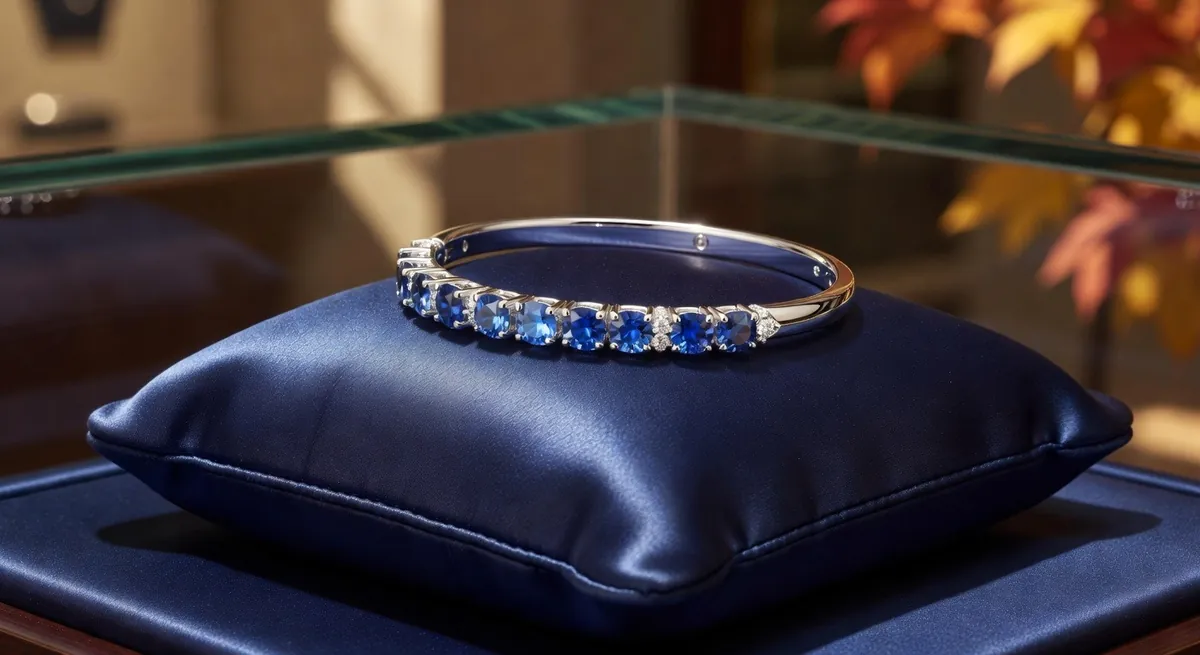
That is why sapphires are not only blue. They also occur in pink, yellow, green, violet and many other shades, and gem dealers speak of fancy sapphires to describe them. Blue remains the classic colour, caused by traces of iron and titanium, while the red of ruby comes from chromium.
Emerald belongs to a different family altogether. It is a variety of , with a hardness of about 7.5 to 8, and its green colour comes from chromium, vanadium or both. Emerald is therefore softer than ruby and sapphire, and it needs a little more care in daily wear.
Famous sources
Where a stone was mined can matter a great deal to collectors, because certain regions became famous for a particular look. A gemmological laboratory can often give an opinion on origin, and some names carry real weight in a catalogue.
- Rubies: Mogok in Myanmar, historically known as Burma, is the most celebrated source.
- Sapphires: Kashmir, Myanmar and Sri Lanka, historically known as Ceylon, are the great historic names.
- Emeralds: Colombia is the classic source, with mines such as Muzo famous for their deep green stones.
These names describe historic reputation rather than a guarantee of beauty. A fine stone can come from many places, and a stone from a famous source can still be ordinary. Yet the association between a region and a quality has shaped the market for generations. Kashmir sapphires are prized for a soft, velvety blue, and the finest Burmese rubies for an intense red that the trade has long described as “pigeon’s blood”.
What affects value
For coloured stones, colour comes first. Dealers look at the hue itself, how strong or saturated it is, and how light or dark the stone appears. A ruby that is too dark, or a sapphire so pale it looks grey, is worth far less than a stone with a rich, even colour.
Clarity is judged differently from diamonds. Most emeralds contain inclusions, traditionally called , the French word for garden, because the tiny fissures and crystals can look like foliage under magnification. Buyers accept a certain amount as part of the stone’s character. Rubies and sapphires are expected to be cleaner, but they too often contain fine needles and crystals.
Cut and size matter as well. Coloured stones are usually cut to show their colour at its best while keeping as much weight as possible, so they are rarely proportioned as strictly as diamonds. And because fine rough is scarce, a ruby or emerald of several carats with good colour is far rarer than a small one.
Treatment is the third great question. Heat treatment of rubies and sapphires is common, and it is accepted in the trade as long as it is disclosed. Emeralds are often oiled to reduce the visibility of fissures. An untreated stone of fine colour is rarer, so a laboratory report that confirms the absence of treatment can make a significant difference.
Ruby and sapphire are the same mineral. Red corundum is called ruby; all other colours are called sapphire.
Royal jewels that made them famous
Perhaps the most famous sapphire of recent times is in an engagement ring. In 1981 Prince Charles gave Lady Diana Spencer a ring with a 12 carat oval Ceylon sapphire surrounded by diamonds. In 2010 Prince William gave the same ring to Catherine Middleton on their engagement. Its appearance in two generations of photographs helped to make sapphire engagement rings widely admired.
Royal treasuries also show how easily stones were once confused. The Black Prince’s Ruby, set in the Imperial State Crown, is in fact a , a different mineral altogether. For centuries red spinels were confused with rubies, because before modern gemmology the two could look almost identical. Only with the rise of scientific mineralogy was the difference properly established.
The story of the Black Prince’s Ruby is a useful reminder for any buyer. A name, however grand, does not prove what a stone is. Identification depends on testing, and the same is true of origin and treatment.
Living with coloured stones
Rubies and sapphires are tough enough for everyday rings, which is one reason they have been popular for engagement jewellery. Emeralds are better suited to earrings, pendants and rings worn with a little care, because their inclusions and lower hardness make them more vulnerable to knocks.
Cleaning follows the same logic. Corundum can usually be cleaned with warm water and a soft brush. Emeralds should be cleaned gently, without heat, steam or ultrasonic cleaners, which can disturb the oil in their fissures.
Glossary
- Corundum
- The mineral of ruby and sapphire, an aluminium oxide with a hardness of 9 on the Mohs scale.
- Beryl
- The mineral family to which emerald belongs, along with aquamarine.
- Jardin
- French for garden, the traditional term for the inclusions found in most emeralds.
- Spinel
- A separate mineral often confused with ruby in the past, as in the Black Prince’s Ruby.
Questions readers ask
Are heated sapphires and rubies less valuable?
Heat treatment of rubies and sapphires is common and accepted in the trade, provided it is disclosed. Untreated stones of fine colour are rarer, so they are usually valued more highly than comparable heated stones. A report from a recognised gemmological laboratory will state whether a stone shows evidence of heating, which is why serious buyers always ask for one.
Why are emeralds oiled?
Most emeralds contain inclusions and small fissures. Oiling is a common treatment that reduces how visible those fissures are, making the stone look clearer. Because the oil sits in the fissures, emeralds should be cleaned gently, without heat, steam or ultrasonic cleaners, and a laboratory report can describe the degree of treatment.
What stone is in the famous royal sapphire engagement ring?
The engagement ring Prince Charles gave Lady Diana Spencer in 1981 has a 12 carat oval Ceylon sapphire surrounded by diamonds. Ceylon is the historic name for Sri Lanka, one of the great sources of sapphire. Prince William later gave the same ring to Catherine Middleton when they became engaged in 2010.