What makes haute couture haute couture
Haute couture is not just a phrase for expensive fashion. It is a protected title in France, with strict rules, specialist workshops and hundreds of hours of handwork.
The words are often used loosely, as if they simply meant very expensive clothes. In France they mean something precise. Haute couture is a legally protected designation, and only houses that meet a demanding set of criteria may use it. Behind the title lies a way of making clothes that has changed remarkably little since the 19th century: by hand, to order, for one client at a time.
A title protected by law
In France, a fashion house cannot simply call itself a couture house. The designation is granted with the approval of the French Ministry of Industry, on the advice of the Fédération de la Haute Couture et de la Mode, the professional body formerly known as the Chambre Syndicale de la Haute Couture.
The criteria are designed to protect a particular way of working rather than a particular style. They cover how the clothes are made, where they are made and how they are presented. In broad terms, a couture house must meet the following conditions.
- It makes clothing to order for private clients, with one or more fittings.
- It has a workshop, an atelier, in Paris, with a minimum number of full-time staff.
- It presents its collections in Paris twice a year, in January and July.
These rules mean that haute couture is anchored in Paris. A designer anywhere in the world can make beautiful made-to-measure clothes, but the French title belongs to houses that meet these conditions and are approved accordingly. That is also why the list of official couture houses is short, and why the title carries such weight within the fashion world.
The Englishman who started it all
It is one of fashion’s pleasing ironies that the father of Parisian haute couture was English. Charles Frederick Worth, an Englishman working in Paris, is widely seen as its founder. He opened his house in Paris in 1858 and built a clientele that included the Empress Eugénie and the courts and high society of his day.
Worth changed the relationship between dressmaker and client. Instead of simply carrying out a customer’s instructions, he proposed his own designs, presented as a collection. He was also the first to show his collections on live models, so that clients could see how a dress moved and fell on a real body. The fashion show, in its earliest form, begins with him.
Behind the title lies a way of making clothes that has changed remarkably little: by hand, to order, for one client at a time.
Inside the atelier: flou and tailleur
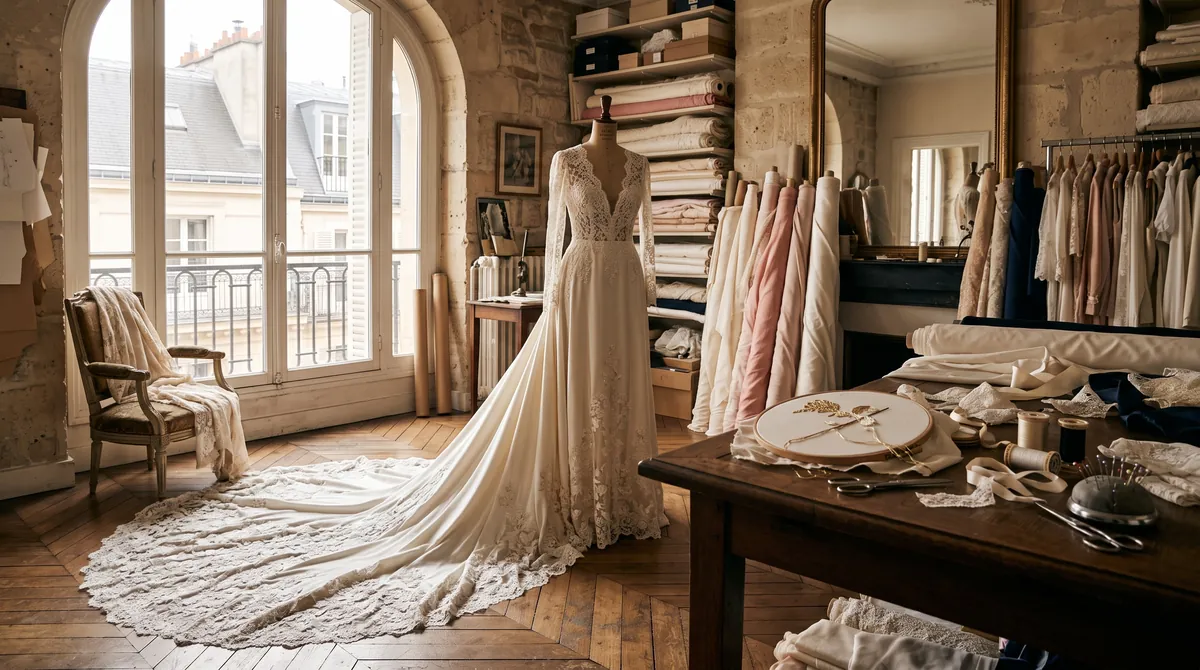
A couture house typically has two kinds of workshop, and the distinction tells you a great deal about how the clothes are made. The is the workshop for soft, draped dressmaking: evening gowns, blouses and anything that depends on the fall of chiffon, silk or crêpe. Its skills lie in draping, gathering and the delicate handling of light fabrics.
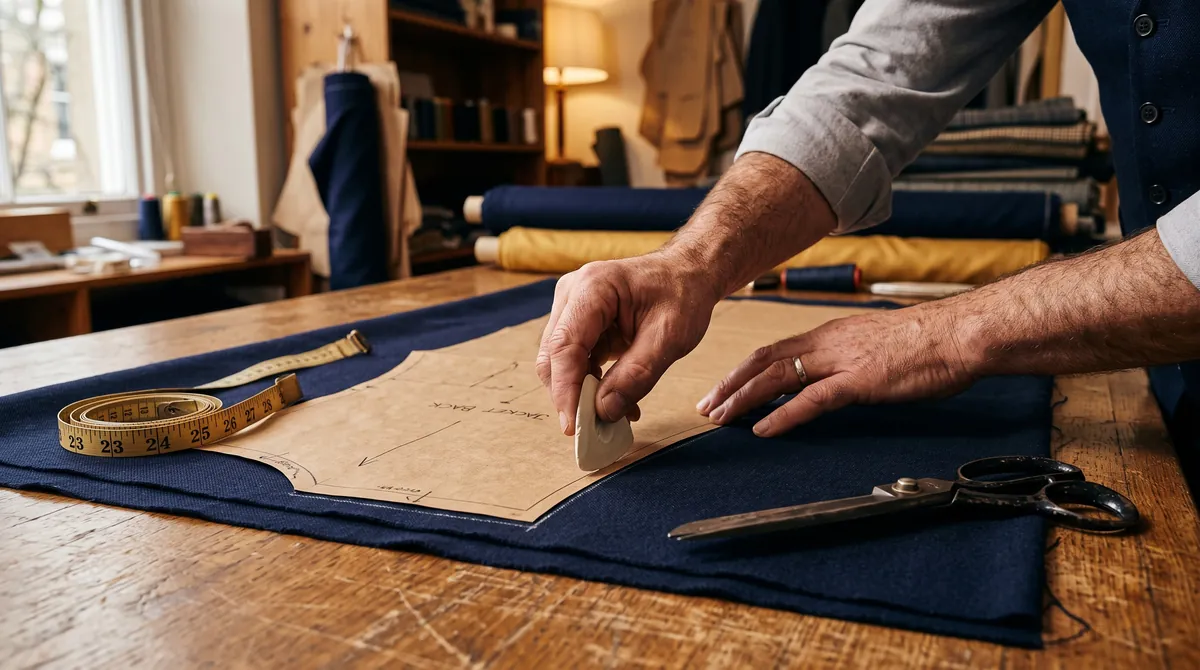
The is the workshop for structured tailoring: jackets, coats and suits. Here the skills are closer to those of a traditional tailor, with interlinings, padding and careful shaping that give a garment its architecture.
Each workshop is led by an experienced head, known as the première d’atelier, and staffed by skilled seamstresses often called the petites mains, literally the little hands. Their work is largely invisible to the public, yet it is the real foundation of haute couture.
How a couture garment is made
A couture garment begins with a design and, usually, a : a prototype made in plain cotton fabric. The toile allows the cut and proportions to be tested and adjusted on the body before any precious material is touched. Only then is the garment made in its final fabric.
Because each piece is made to order, the client comes in for one or more fittings. At each stage the garment is adjusted to her figure and posture, so that the finished piece fits in a way no standard size can. Seams are sewn largely by hand, and the inside of a couture garment is often finished as carefully as the outside.
The time involved is considerable. A single couture evening dress can take from about one hundred to several hundred hours of handwork, much of it embroidery. Beads, sequins, threads and feathers may be applied one by one, and the most elaborate pieces involve specialist workshops alongside the house’s own ateliers.
Couture and ready-to-wear
Ready-to-wear, or , is the opposite approach. It is produced in standard sizes, in numbers, and sold in shops rather than made for an individual client. It can be beautifully made, but it is designed to fit many people well rather than one person perfectly. From the 1960s onwards ready-to-wear became the main business of most fashion houses, as the market for clothes made entirely by hand narrowed.
That shift did not end haute couture, but it changed its role. Today it is the workshop where a house shows what its ateliers can do, preserves skills that would otherwise be lost and dresses a small circle of private clients. Many of the techniques seen in couture later inspire the house’s ready-to-wear and accessories.
So the next time you see the words haute couture, it is worth asking a simple question: was this made to order in a Paris atelier, with fittings, for one person? If the answer is yes, you are looking at the real thing.
Glossary
- Haute couture
- A legally protected French designation for made-to-order clothing produced by approved houses with ateliers in Paris.
- Flou
- The couture workshop for soft, draped dressmaking such as evening gowns.
- Tailleur
- The couture workshop for structured tailoring such as jackets and coats.
- Toile
- A prototype of a garment made in plain cotton, used to test the cut before the final fabric.
- Prêt-à-porter
- French for ready-to-wear: clothing produced in standard sizes rather than made to order.
Questions readers ask
Can any designer call their work haute couture?
Not in France, where haute couture is a legally protected designation. Houses must be approved by the French Ministry of Industry on the advice of the Fédération de la Haute Couture et de la Mode. The criteria include made-to-order clothing with fittings for private clients, an atelier in Paris with full-time staff and collections shown in Paris twice a year.
How long does a couture dress take to make?
A single couture evening dress can take from about one hundred to several hundred hours of handwork, much of it embroidery. The process usually includes a toile to test the cut, one or more fittings with the client and extensive hand sewing and finishing, so the time depends on the complexity of the design.
What is the difference between haute couture and ready-to-wear?
Haute couture is made to order for an individual client, with fittings, in a Paris atelier, and largely by hand. Ready-to-wear, or prêt-à-porter, is produced in standard sizes and sold in shops. Ready-to-wear became the main business of most fashion houses from the 1960s onwards, while couture remains a small, highly skilled craft.