Royal memorabilia: coronation souvenirs and what makes them collectable
Coronation mugs, jubilee plates, signed letters: most royal memorabilia is common and charming, a little is genuinely rare. Here is how to tell the difference.
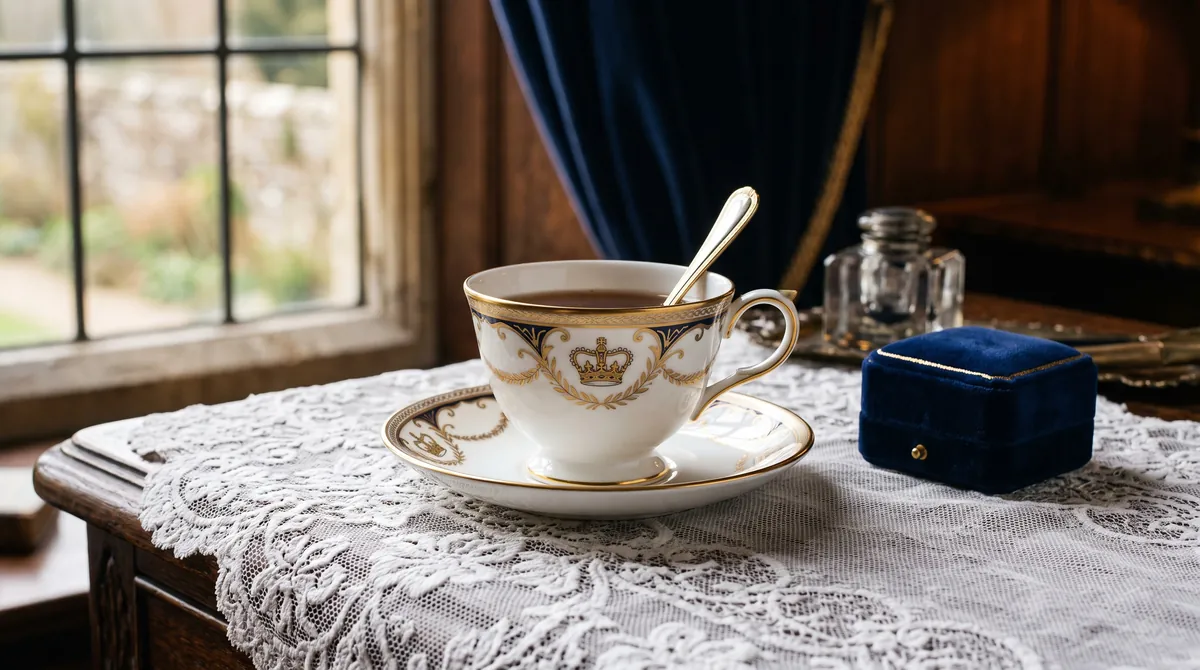

Many British homes have one: a mug with a crown on it, a plate with a royal portrait, a tin from a jubilee. Royal memorabilia is a large and popular collecting field, and also a widely misunderstood one. Most of it is charming rather than valuable, and a little is genuinely rare. Knowing the difference is most of the art.
A long tradition of souvenirs
Commemorative ceramics, such as mugs, plates and beakers, have been made for royal events since at least the 18th and 19th centuries. Coronations, weddings and jubilees have each produced their own wave of objects, from simple printed pottery to fine porcelain.
Recent coronations followed the same pattern. Queen Elizabeth II was crowned in Westminster Abbey on 2 June 1953, and King Charles III and Queen Camilla on 6 May 2023. Both events produced souvenirs in great numbers, from children’s mugs to formal commemorative pieces. The late Queen’s Silver, Golden, Diamond and Platinum Jubilees, in 1977, 2002, 2012 and 2022, added further waves of their own.
The basic rule follows from this. Mass produced souvenirs are common and usually of modest value. They were made to be bought by many people, and many people kept them. A coronation mug from 1953 may carry real family meaning without being scarce.
That is no reason to dismiss them. Common pieces in excellent condition, especially with their original packaging, are a pleasure to collect and form a social history of how the country celebrated. It is simply wise to adjust expectations before asking for a valuation. A run of pieces covering several reigns can also be more interesting as a group than any single item on its own.
The Edward VIII puzzle
One corner of the field has a famous twist. Edward VIII abdicated in December 1936, before his coronation, which had been planned for May 1937. Manufacturers had already produced souvenirs in advance, and these Edward VIII coronation pieces are a well known collecting area.
Many people assume they must be rare. In fact, because they were produced in large numbers, many are not. His brother, George VI, was crowned in May 1937 instead, and souvenirs were made for that coronation too. A piece is not valuable simply because the event it celebrates never took place.
A piece is not valuable simply because the event it celebrates never took place.
The Edward VIII pieces are still worth knowing about, because they show how history and production interact. Manufacturers had to plan well ahead of a royal event, and the souvenirs they made record that planning, even when events turned out differently.
Provenance: where real rarity lies
The rarest royal memorabilia is not a souvenir at all. It is an item with documented royal : something used, owned or signed by a member of a royal family, with a clear paper trail. Such pieces are far rarer than anything made for sale to the public.
The key word is documented. A story passed down in a family is not provenance on its own. Look for letters, invoices, auction records, photographs or other evidence that connects the object to its royal owner step by step. Signed letters in particular deserve careful checking, so ask whether a signature is handwritten and whether its history can be traced.
If a piece with such a connection comes up for sale, read the catalogue description closely. Note exactly what is claimed and what supports it, and ask the seller for copies of the documents. The strength of the paper trail is what separates a royal object from an object with a royal story.
Coins, medals and limited editions
Official commemorative coins and medals are issued for coronations and jubilees by the Royal Mint. Their official status gives them a clear identity, which makes them easy to research and catalogue. As with ceramics, though, their value depends on how many were made and the condition in which they survive.
Limited editions with numbered certificates are a step up from open production. The maker matters too, and names such as Royal Crown Derby or Wedgwood are well known to collectors. Keep the certificate with the piece, because without it a can be hard to tell apart from a standard one. Coins kept in their original presentation cases, with any accompanying certificate, are generally more appealing to collectors than loose examples.
Caring for what you have
Condition is the one part of value you can influence yourself. Ceramics are best displayed away from direct sunlight and from shelves that are often knocked, and cleaned gently by hand. Printed and gilded decoration is more fragile than it looks.
Paper items, such as programmes, newspapers and letters, need even more care. Keep them flat, away from damp and light, and avoid tape, glue or paper clips, which can leave marks over time. Coins and medals are best handled by the edges and left in their original packaging.
How to judge a piece
When you assess royal memorabilia, work through a few questions in turn.
- Was it made for sale to the public, or does it have a documented royal connection?
- Who made it, and is it a numbered limited edition with its certificate?
- What condition is it in: are there chips, cracks, fading or wear?
- Does it still have its original packaging?
Look underneath, too. The maker’s mark on the base of a ceramic piece, together with any edition number, is often the quickest way to identify what you have.
Above all, be honest about what you have. A souvenir can be a delightful object with real family meaning, and a documented royal piece can be a serious collector’s item. Both deserve to be kept well, but only one is likely to be rare.
Glossary
- Commemorative ware
- Ceramics such as mugs, plates and beakers made to mark a royal or national event.
- Provenance
- The documented history of an object’s ownership, ideally supported by letters, invoices or auction records.
- Limited edition
- A piece made in a fixed, stated number, usually accompanied by a numbered certificate.
- Abdication
- The formal giving up of the throne, as Edward VIII did in December 1936.
Questions readers ask
Is my Edward VIII coronation mug valuable?
Possibly, but probably less than you might hope. Edward VIII abdicated in December 1936 before his planned coronation, and souvenirs made in advance are a well known collecting area. Because they were produced in large numbers, many are not rare. Condition, the maker and any original packaging will matter more than the story of the coronation that never happened.
What makes royal memorabilia valuable?
Rarity and documentation above all. Items with documented royal provenance, used, owned or signed by a member of a royal family with a clear paper trail, are far rarer than souvenirs. For commemorative pieces, condition, original packaging, numbered limited editions and the maker, such as Royal Crown Derby or Wedgwood, all affect value.
How should I approach coronation coins and medals?
Official commemorative coins and medals for coronations and jubilees are issued by the Royal Mint, so their identity is clear and easy to research. They make a tidy, well documented collection. As with ceramics, value depends on how many were made and on condition, so keep them in their original packaging and handle them as little as possible.