Collecting watches: where to begin
Choose a theme, learn what drives value and buy from people who stand behind their watches: a practical guide to the first steps of a serious collection.
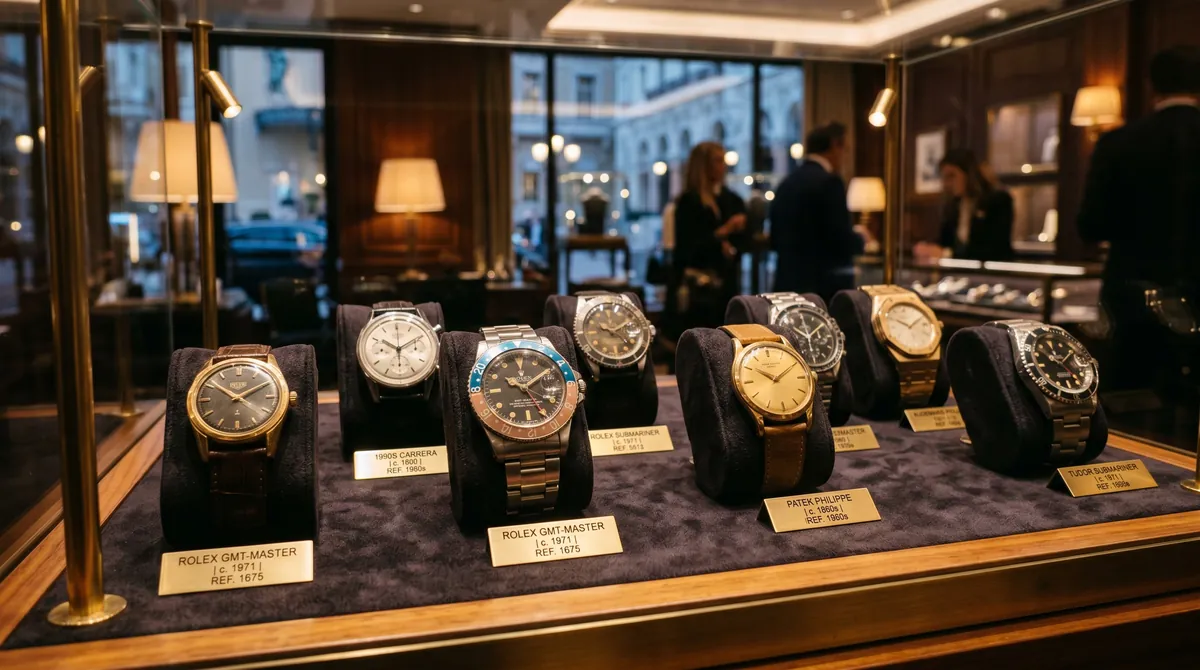

Many watch collections begin by accident. A first good watch marks an occasion, a second follows, and one day you realise you have become a collector. Starting with a little intention saves money and disappointment. Here is a practical guide to the first steps: choosing a focus, learning what drives value and buying with confidence.
Choose a theme
The most useful decision a new collector can make is to narrow the field. Watchmaking is vast, and a collection without a focus easily becomes a drawer of unrelated purchases. A theme gives you direction and, just as importantly, helps you learn faster, because every watch you study adds to the same body of knowledge.
- A single brand, following its history and key models
- A complication, for example chronographs
- A decade, such as the watches of the 1960s
- A type, such as divers’ watches
Your theme can change over time, and two can be combined, such as chronographs from a single decade. What matters is that each new watch has a reason to be there. A focused collection is also easier to explain, to insure and, one day, to pass on.
What matters is that each new watch has a reason to be there.
Learn before you buy
Before spending seriously, spend time. Go to auction viewings, where you can examine watches and compare examples side by side. Read the reference books and catalogues for your chosen theme, and learn the reference numbers that matter, so that you can recognise a correct dial or case at a glance.
It also helps to decide what you are collecting for. Some people want watches to wear every day, others to study and keep. Buy what genuinely interests you rather than what you hope will rise in value: a collection built on curiosity is more rewarding to live with, and easier to keep disciplined.
Originality and condition
With vintage watches, value is driven above all by condition, originality and . Collectors want a watch that is as close as possible to how it left the maker: original dial, original hands, original case, and serial numbers that match.
Case edges deserve special attention. Each time a case is polished, a little metal is removed, and crisp edges and bevels gradually soften. Unpolished cases with sharp lines are prized, while over-polished cases usually lower collector value. Dials replaced during a service, known as service dials, usually lower value too. Hands and crowns can also be replaced during servicing, so check them as carefully as the dial.
This can feel counterintuitive. A gleaming watch may look better to a newcomer than a slightly worn one with sharp edges, but to an experienced collector the worn original tells a more honest story. Learning to see that difference is the first real skill of collecting, and it only comes from looking at many watches closely.
Box, papers and history
When a watch comes with its original box and papers, such as the certificate or warranty card, it is described as a . This usually adds value, because the papers help confirm what the watch is and where it came from. Boxes and papers can, however, become separated from their watches, so check that any document matches the serial number of the watch it accompanies.
Service papers and a known history help too. A record of who serviced the watch and what was done is reassuring, especially for a mechanical watch you intend to wear. Several historic manufacturers also offer extracts from their archives, which can confirm the original configuration of a watch, for example the dial it was delivered with.
Keep every document safely and make copies. The paperwork is part of the watch, and it will matter to whoever owns it after you. A simple folder for each watch, with papers, receipts and service notes, is one of the most valuable habits a collector can form.
Where to buy
For a first serious purchase, the seller matters as much as the watch. Buying from established auction houses or specialist dealers with return policies and guarantees reduces risk considerably. Read the terms closely: what is guaranteed, for how long, and what happens if a part later turns out not to be original.
Auction catalogues and condition reports are also an excellent education. Read them even when you are not bidding, and compare what the specialists describe with what you can see in the photographs. Over time you will start to notice the details that separate an ordinary example from a fine one.
Be patient with yourself in the early stages. Handling watches at viewings, asking questions and listening to how specialists describe condition will teach you more than any amount of browsing. Nobody expects a beginner to know everything, and good sellers are used to explaining. If you buy privately, apply the same standards: ask for documents, compare serial numbers and, where possible, have the watch checked by an independent watchmaker before money changes hands.
Building slowly
There is no prize for speed. It is usually wiser to buy one excellent example than several compromised ones: a fine original watch keeps its appeal, while a compromised one rarely improves with time. Set yourself a rhythm, too. A few considered purchases, each researched properly, will teach you more than a flurry of quick decisions, and they leave room to change direction if your interests shift.
Wear your watches, have them serviced when needed and keep good records. A collection is more than a list of reference numbers. It is a set of objects you understand, and the more you know about each one, the better your next decision will be.
Glossary
- Full set
- A watch offered with its original box and papers, such as the certificate or warranty card.
- Service dial
- A replacement dial fitted during a service; it usually lowers a vintage watch’s collector value.
- Archive extract
- A document from a manufacturer’s records that can confirm a watch’s original configuration.
- Provenance
- The documented history of a watch’s ownership and care, from its original sale to the present.
- Reference number
- The manufacturer’s model number, identifying a specific design within its range.
Questions readers ask
Do box and papers really matter?
Yes, in most cases. A watch with its original box and papers, such as the certificate or warranty card, is called a full set, and this usually adds value. The papers help confirm what the watch is and where it came from. Service records and archive extracts from the manufacturer add further confidence, especially for vintage pieces.
Should I have my vintage watch polished?
Think carefully first. Each polish removes a little metal and softens the crisp edges and bevels of the case. Over-polished cases usually lower collector value, while unpolished cases with sharp lines are prized. If you send the watch for a service, tell the watchmaker clearly that the case should not be polished unless you agree to it.
Where should a beginner buy a first serious watch?
From established auction houses or specialist dealers that offer return policies and guarantees. These reduce the risk of buying a watch with replaced parts or an unclear history. Read the terms carefully, ask whether the dial, hands and case are original, and request close photographs. A seller who answers clearly and stands behind the watch is worth a great deal.