Provenance: the paper trail that makes an object valuable
Every serious object has a story of who owned it and when. Here is how that paper trail is built, read and protected.
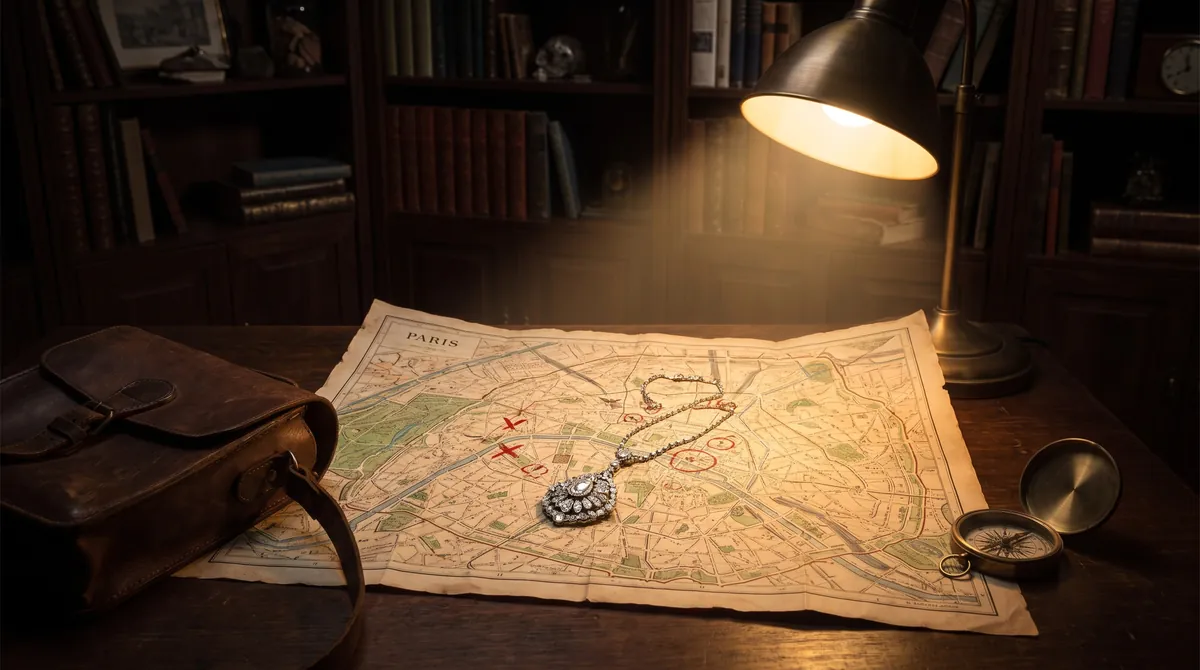

Two diamond brooches can look identical in a showcase and still sell for very different sums. The difference often lies not in the stones but in a folder of papers: invoices, letters, old photographs and catalogue entries that tell you where the object has been. That folder is its , and for collectors it can matter as much as the object itself.
What provenance actually means
Provenance is the documented history of ownership of an object, from the moment it was made to the present day. Ideally it forms an unbroken chain: the maker or first seller, each later owner, and the route by which the object reached you. The word comes from the French provenir, to come from, and it is used across the art, antiques and jewellery trades.
Provenance does two practical jobs at once. First, it supports authenticity, because a piece that can be traced back to its maker is harder to doubt. Second, it supports legitimacy: it shows that the object was acquired lawfully and that the seller has the right to sell it.
A third job is less practical and more emotional. A story attached to an object, especially a story involving a known name, makes it more desirable. Collectors are buying the thing and its biography together.
Collectors are buying the thing and its biography together.
Why it matters for jewellery, watches and art
In jewellery, provenance helps answer questions a loupe cannot. Who made the setting, when was it first sold, and did it once belong to someone whose name carries weight? A distinguished provenance, for example from a royal collection or a famous collector, can raise the price of an object considerably at auction.
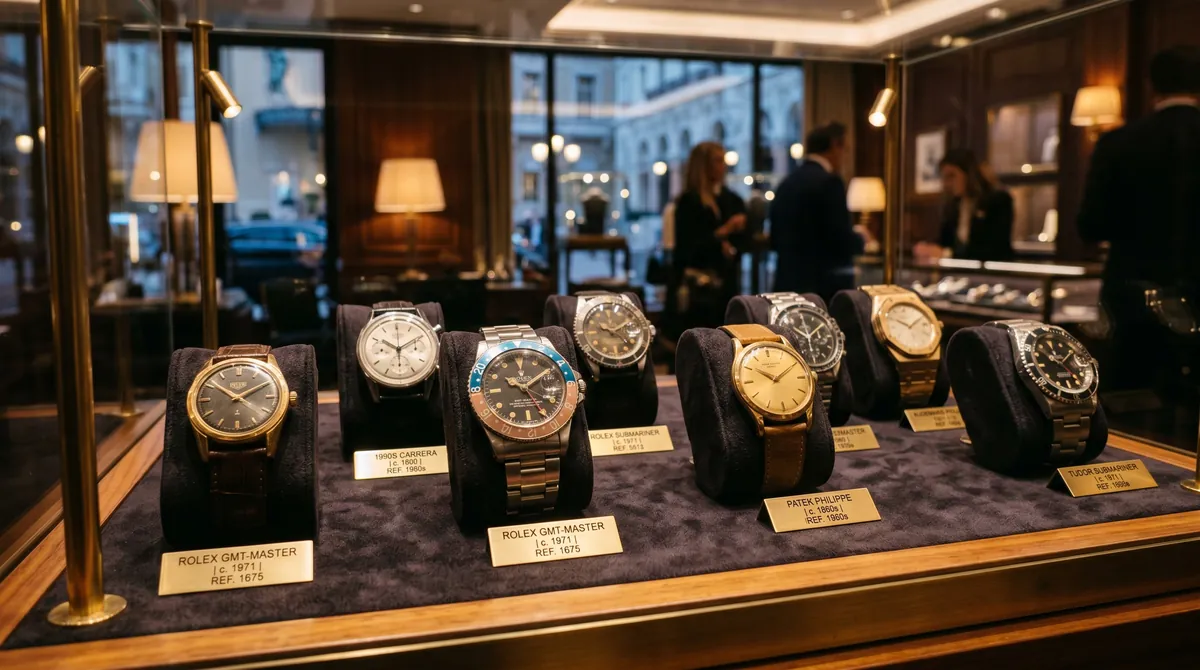
Watches work in a similar way. Several historic manufacturers offer extracts from their archives that confirm when a watch was made and how it was originally configured. Combined with service records and the original papers, such an extract turns a good watch into a well documented one.
In art, provenance is often one of the first things a specialist checks. Exhibition histories, references in books and earlier auction catalogues help to place a painting in time and to connect it with an artist’s known work. A picture that appears in a respected exhibition catalogue from decades ago has a very different standing from one that surfaces with no past at all.
The same is true of collectibles in general. A piece of royal memorabilia with a documented link to its original owner, or a signed letter with a clear history, is far rarer than an ordinary souvenir. The paper trail is what separates the two.
The documents that build a paper trail
Provenance is rarely a single certificate. It is a collection of separate pieces of evidence, each confirming part of the story. The more independent the sources, the stronger the chain becomes.
- Original invoices and receipts from the maker or first retailer
- Certificates and archive extracts issued by the manufacturer
- Exhibition records and references in books or scholarly literature
- Earlier auction catalogues in which the object appears
- Photographs showing the object in a home, a portrait or at an event
- Letters, wills and family correspondence that mention it
- Insurance valuations made over the years
For gemstones there is an extra layer. Laboratory reports from institutions such as GIA, SSEF or Gübelin document the identity of a stone, any treatments it has undergone and, in some cases, its geographic origin. A report does not prove who owned a jewel, but it anchors the description of the stone and helps later owners match the paperwork to the piece in front of them.
Gaps, doubts and the years 1933 to 1945
Few objects have a perfect record. Papers get lost, families move, and many things changed hands privately without any documentation at all. A gap is not automatically a problem, but it is always a question worth asking.
One period receives particular attention. Gaps in provenance during the years 1933 to 1945 are scrutinised closely in the art market because of the looting of the Nazi era. Databases and checks exist for exactly this purpose, and serious sellers are expected to research the history of works that passed through those years.
For a buyer, the practical lesson is simple. If an object’s history jumps from a famous name to the present day with nothing in between, ask what happened in the missing decades. A confident seller will welcome the question and show you what is known.
How to build and protect provenance
If you already own pieces of value, you are already the custodian of their provenance. The good news is that protecting it costs little more than a little discipline and a sensible filing habit.
Keeping originals safe, making digital copies and passing them on with the object all preserve value for the next owner. Write down what you know while memories are fresh, including family stories, but label them honestly as stories until a document confirms them. Note any repairs, resizing or servicing as well, with dates and the name of the workshop.
When you sell or bequeath an object, let the papers travel with it. An heir who inherits a watch without its box and papers, or a brooch without the letter that explains where it came from, inherits less than you intended.
Provenance as part of the object
It is tempting to think of provenance as paperwork that sits beside the real thing. Experienced collectors see it differently. The chain of ownership is part of the object, as much as its maker’s mark or its original clasp, and every owner adds a link.
That makes you, as the current owner, a small part of its history. Look after the record as carefully as you look after the object, and the next person to hold it will know exactly what they have.
Glossary
- Provenance
- The documented history of ownership of an object, from its creation to the present.
- Archive extract
- A document from a manufacturer’s records confirming details such as the production date and original configuration of a piece.
- Due diligence
- Careful research into an object’s history and legal status before it is bought or sold.
- Laboratory report
- A gemmological document recording a stone’s identity, any treatments and sometimes its geographic origin.
Questions readers ask
Does an object without provenance have no value?
No. Many fine objects have little or no recorded history, and they are judged on their quality, condition and authenticity. Missing provenance simply means fewer facts to rely on, so buyers tend to be more cautious and specialists ask more questions. A well documented history, by contrast, can raise the price an object achieves, especially when it includes a distinguished name.
Is a certificate of authenticity the same as provenance?
Not quite. A certificate confirms what an object is, while provenance records who has owned it and when. The two support each other: a certificate can be one link in the chain of provenance, alongside invoices, catalogues, photographs and letters. The strongest records combine several independent sources rather than relying on a single document.
Should I keep the original box and papers of a watch?
Yes. The original box and papers form part of a watch’s history and usually add value when it is sold. Store them safely, keep service records with them and consider asking the manufacturer for an archive extract if one is available. Together these documents give the next owner confidence about the watch’s origin and condition.